Because when it comes to compliance, it’s not enough just to comply. You have to be able to prove it.
The audit is coming
Someone from the audit team asks a seemingly simple question:
“Who approved this policy, and when were employees notified?”
The search begins.
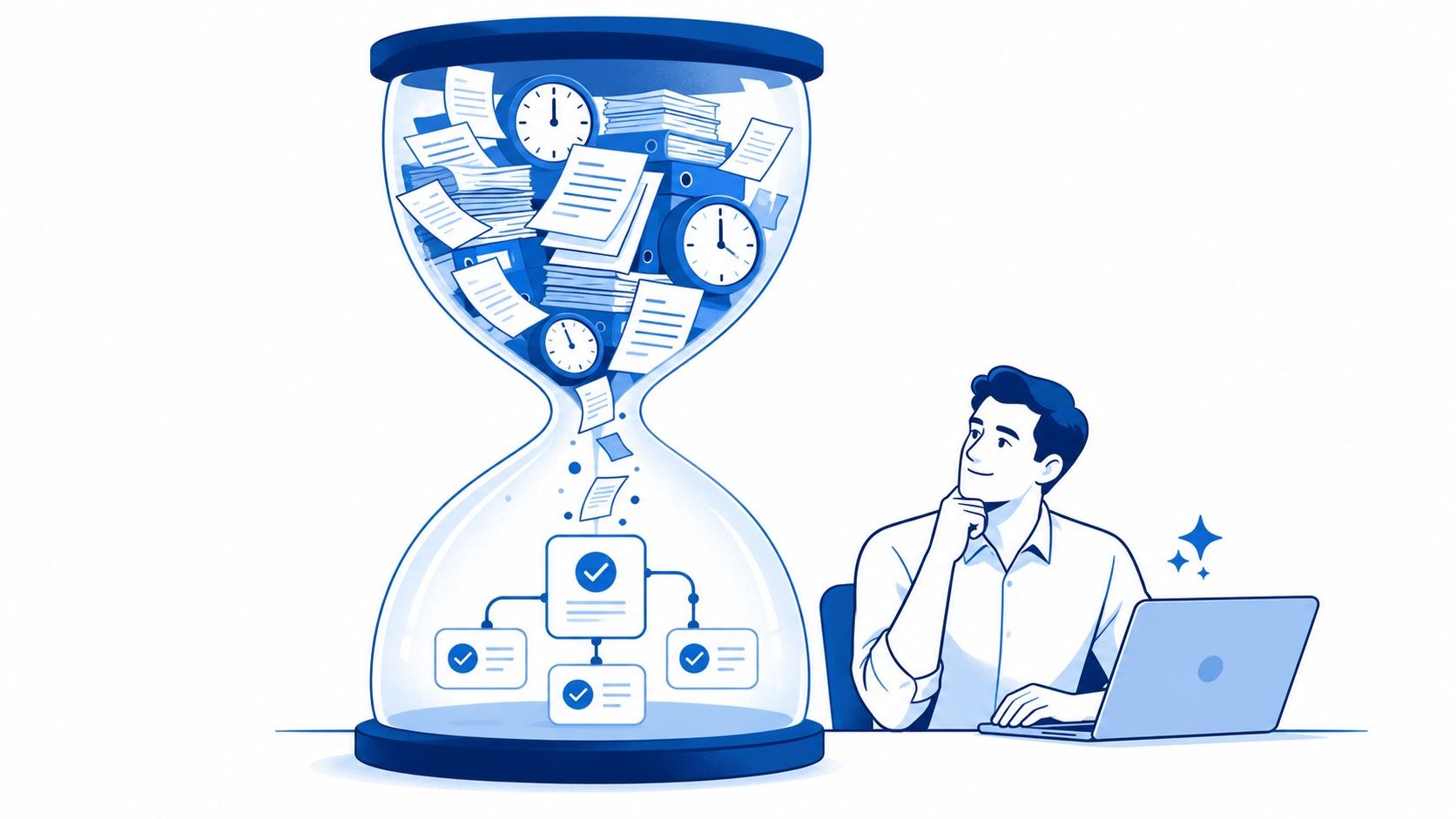
Emails. Shared folders. Messages on Teams. An Excel spreadsheet that someone updated months ago. A verbal approval that no one documented.
Two days later, the compliance team has still not been able to reconstruct the entire chain.
Not because the organization failed to comply.
But rather because he can’t prove it.
And that’s the real problem.
In compliance, there is a huge difference between complying and being able to demonstrate compliance. More and more audits, clients, certification bodies, and regulators are focusing their attention precisely on that difference.
Because the question that always ends up coming up is never:
“Do you have a policy?”
The real question is:
“Can you prove that this policy was approved, communicated, and implemented?”
The real problem isn’t noncompliance
For years, many organizations have built their compliance systems around documents: policies stored in shared folders, forms sent via email, controls tracked in Excel spreadsheets, approvals scattered across email threads, and evidence spread across different departments.
The model seems to work… until someone asks for proof.
Modern standards—ISO 27001, ISO 37301, ENS, GDPR, NIS2, DORA, or SOC 2—are no longer satisfied with the mere existence of a policy or procedure. They require proof that it has been effectively implemented.
And it’s not just audits.
More and more customers are requesting security questionnaires, certifications, proof of training, audit records, or evidence of compliance before signing a contract or renewing a business relationship.
The ability to demonstrate compliance has become a competitive advantage.
The most mature organizations no longer talk solely about regulatory compliance. They talk about demonstrable compliance.
The difference between having a policy and demonstrating compliance with it can determine the outcome of a certification, a regulatory audit, or the awarding of a major project.
What Does Traceability Mean in Practice?
Traceability is the ability to reconstruct the complete history of any activity related to regulatory compliance.
It should make it possible to answer questions such as the following at any time:
- What happened?
- When did it happen?
- Who did it?
- What changes were made?
- What evidence was recorded?
Let’s consider the life cycle of a corporate policy.
We’re not just talking about the document.
We’re talking about its creation, compliance review, management approval, publication, communication to employees, individual acceptance, subsequent reviews, and the new approvals associated with each change.
All of this forms a chain.
And each step must be recorded automatically, without relying on anyone to remember to document it.
What Is Evidence, and Why Is a Single Piece of Evidence Not Enough?
Evidence is verifiable proof that something actually happened.
Not a statement.
Not a statement.
A test.
In policy management, this verification includes the approved document, the version history, the publication date, the electronic signature, and each user’s acceptance record.
In supplier management, these include completed questionnaires, submitted certifications, conducted evaluations, and implemented action plans.
For training, course announcements, attendance records, assessment results, and certificates issued.
In incident management, the initial record, communications, corrective actions, and the documented resolution.
But isolated evidence has limited value.
What really instills confidence in an auditor is the existence of a complete chain of evidence.
For example:
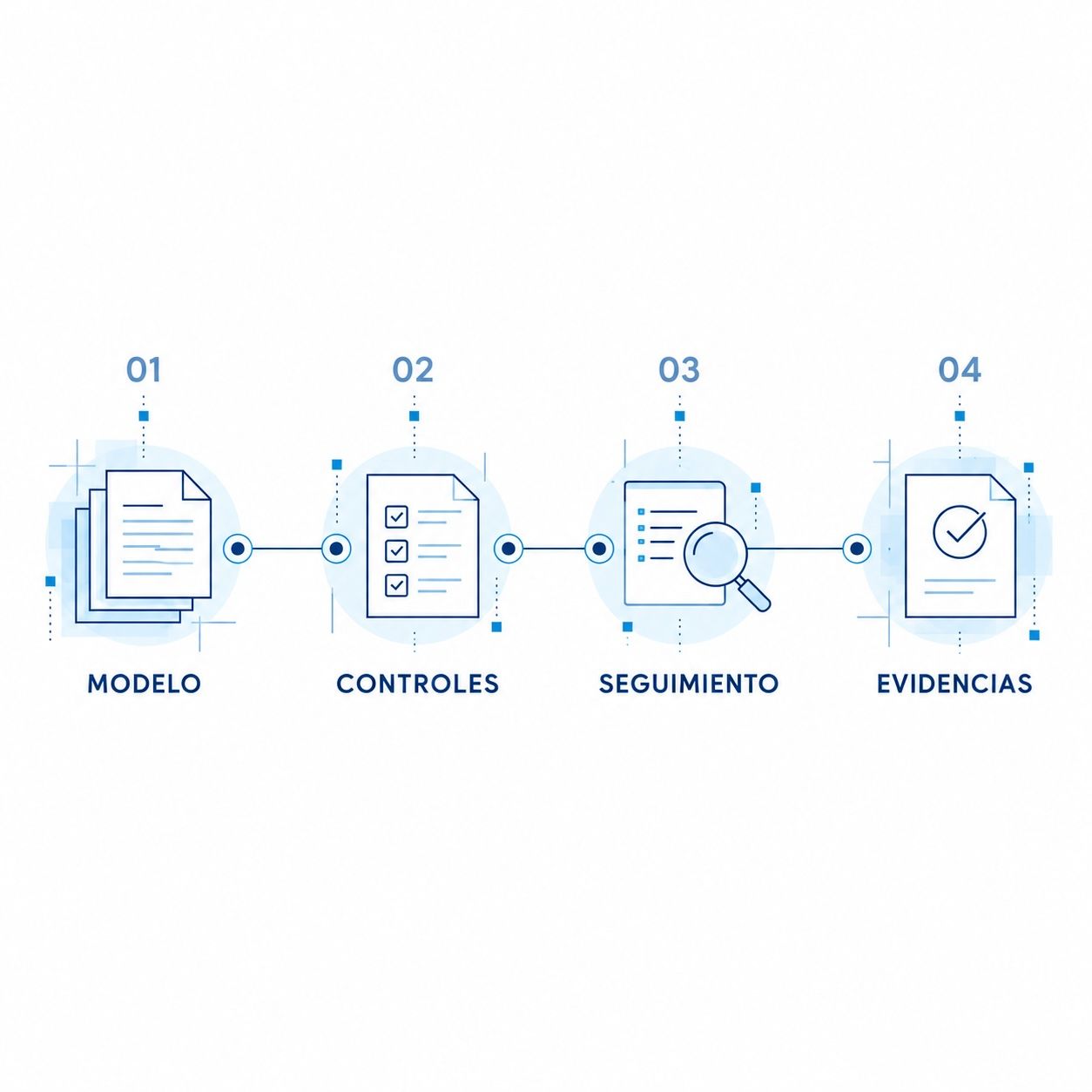
Data Protection Policy → Approval → Publication → Communication → Acceptance → Periodic Review
Let’s imagine that an employee reports a data protection violation.
The organization must demonstrate:
- What policy was in effect at that time?
- Who approved it?
- When it was published.
- When it was announced.
- If that employee had accepted it.
Without a chain of evidence, reconstructing that information can take days.
With proper traceability, the answer is available in seconds.
The hidden cost of doing this by hand
Preparing an audit manually isn’t just a hassle.
It’s expensive and risky.
Compliance, HR, IT, security, and quality teams may end up spending days or even weeks searching for documentation, retracing approval chains, requesting evidence via email, and preparing reports.
Time that is no longer spent managing real risks.
And yet, there is always the possibility that a piece of evidence cannot be located, that there are conflicting accounts, or that a record was never created properly.
When that happens, the issue is no longer whether or not the organization complied.
The problem is that he can’t prove it.
From Annual Audits to Continuous Audits
Traditionally, many organizations viewed auditing as a one-time project.
For weeks, they gathered documentation, sought out evidence, and prepared reports.
Once the audit was complete, the system returned to its normal state.
Today, that approach is proving increasingly inefficient.
Modern compliance systems enable the continuous generation of evidence, making audit preparation a natural part of daily operations.
Instead of preparing for the audit when it arrives, the organization maintains a state of constant readiness.
The result is less administrative effort, a lower risk of noncompliance, greater trust among clients and regulators, and significantly lower audit costs.
Toward Compliance That Speaks for Itself
The most mature organizations have adopted a simple principle:
Each action automatically generates its own evidence.
This model is based on three fundamental pillars.
Automatic Registration
Every creation, modification, approval, signature, or acceptance is recorded without manual intervention.
The system operates while the equipment is running.
Centralization
All evidence is stored in a single repository.
No scattered emails.
No duplicate folders.
No conflicting accounts.
Relationship between pieces of evidence
The evidence is not limited to isolated instances.
They are interconnected to reconstruct entire processes from start to finish.
The result is an organization capable of answering any question about its regulatory compliance in a matter of seconds.
How does ithikios do it?
Ithikios does more than just store documents.
Its goal is to turn every compliance activity into verifiable evidence.
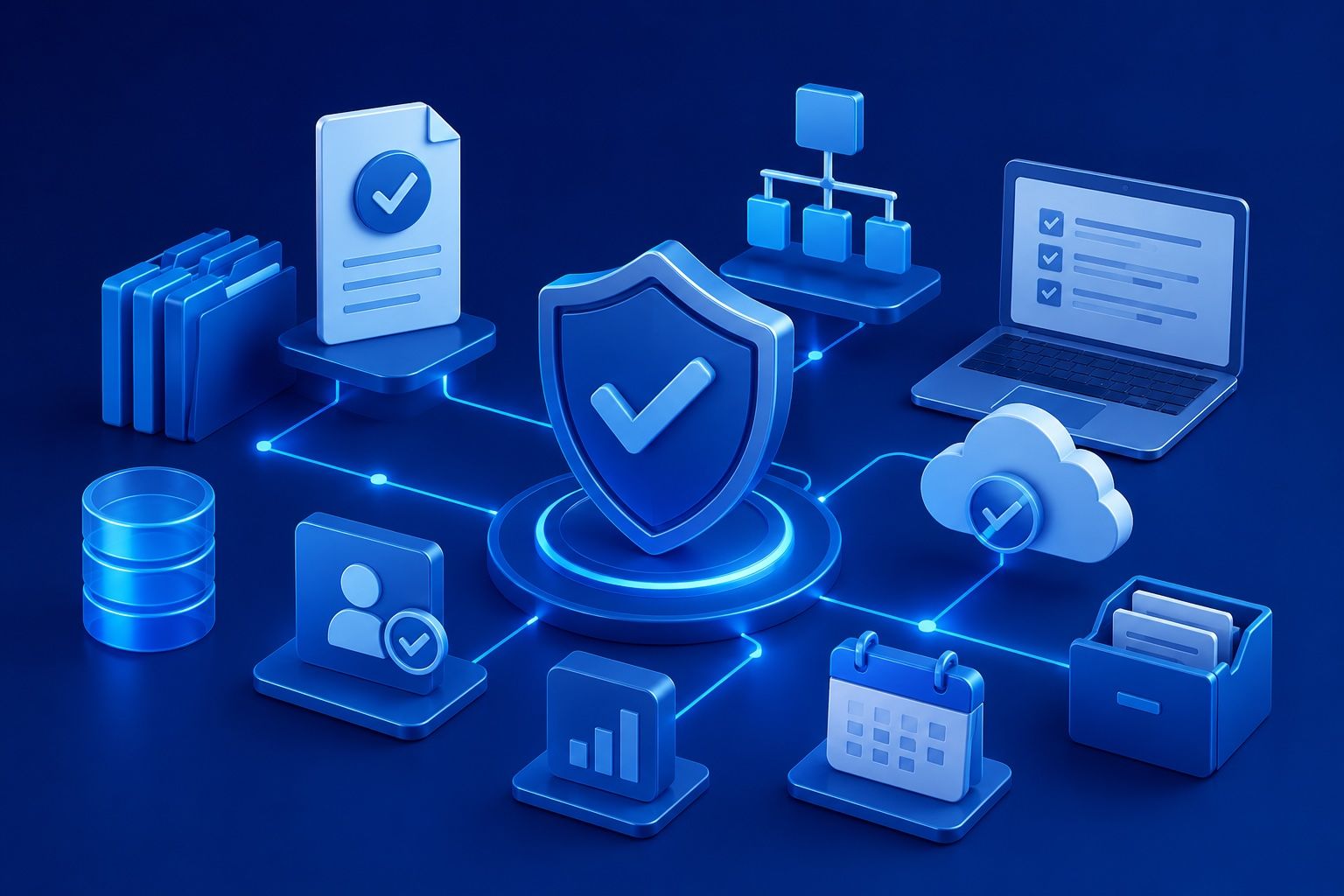
Every interaction within the platform automatically generates records, histories, approvals, signatures, communications, and associated evidence, creating a compliance trail that can be traced from start to finish at any time.
Policy Manager
Track the entire lifecycle of each policy: versions, approvals, publications, communications, and individual acceptances.
When an auditor asks who approved a policy, when it was published, or who accepted it, the answer is available in seconds.
Third Party Manager
It provides complete traceability for every supplier relationship: questionnaires, certifications, evaluations, periodic reviews, and action plans.
Everything is recorded, linked, and available for reference.
Trust Center
Centralize compliance documentation related to clients and third parties, ensuring that records are always up to date and accessible in a controlled manner.
Incident Manager and Reporting Channel
They automatically record every incident, report, investigation, and corrective action, creating a fully traceable chain of events.
Rights Manager
It documents the exercise of rights related to privacy and data protection, maintaining the necessary evidence to demonstrate compliance with the GDPR.
The result is a platform where compliance is not just about preparing for audits.
It’s just always ready.
Conclusion
The organizations that manage compliance best are not necessarily the ones that produce the most documents.
They are the ones that can demonstrate, quickly, objectively, and verifiably, that the processes have actually been carried out.
Traceability and evidence are no longer just an add-on to compliance.
They are the mechanism that makes it possible to verify this.
Because the question that always ends up coming up isn’t:
“Do they comply?”
The question is:
“Can you prove it?”
And in an environment where auditors, clients, and regulators are increasingly demanding evidence, the ability to answer that question in seconds becomes a competitive advantage that is hard to match.
Would you like to see how Ithikios automatically builds your organization’s audit trail? Request a demo and discover how to turn compliance into demonstrable compliance.