A few years ago, we started talking about DevOps. Then came SecOps, FinOps, and DataOps.
All of these disciplines came to the same conclusion: managing a complex process is not about having good tools, but about building a system capable of operating continuously, automatically, and in a measurable way.
However, there is one area of the company that has not yet undergone this transformation. In far too many organizations, compliance remains one of the last major processes managed through emails, spreadsheets, and personal reminders.
Paradoxically, there have never been so many regulatory obligations… nor so many tools to manage them. And yet, many compliance departments continue to spend a significant portion of their time tracking down documents, piecing together evidence, and keeping track of pending tasks.
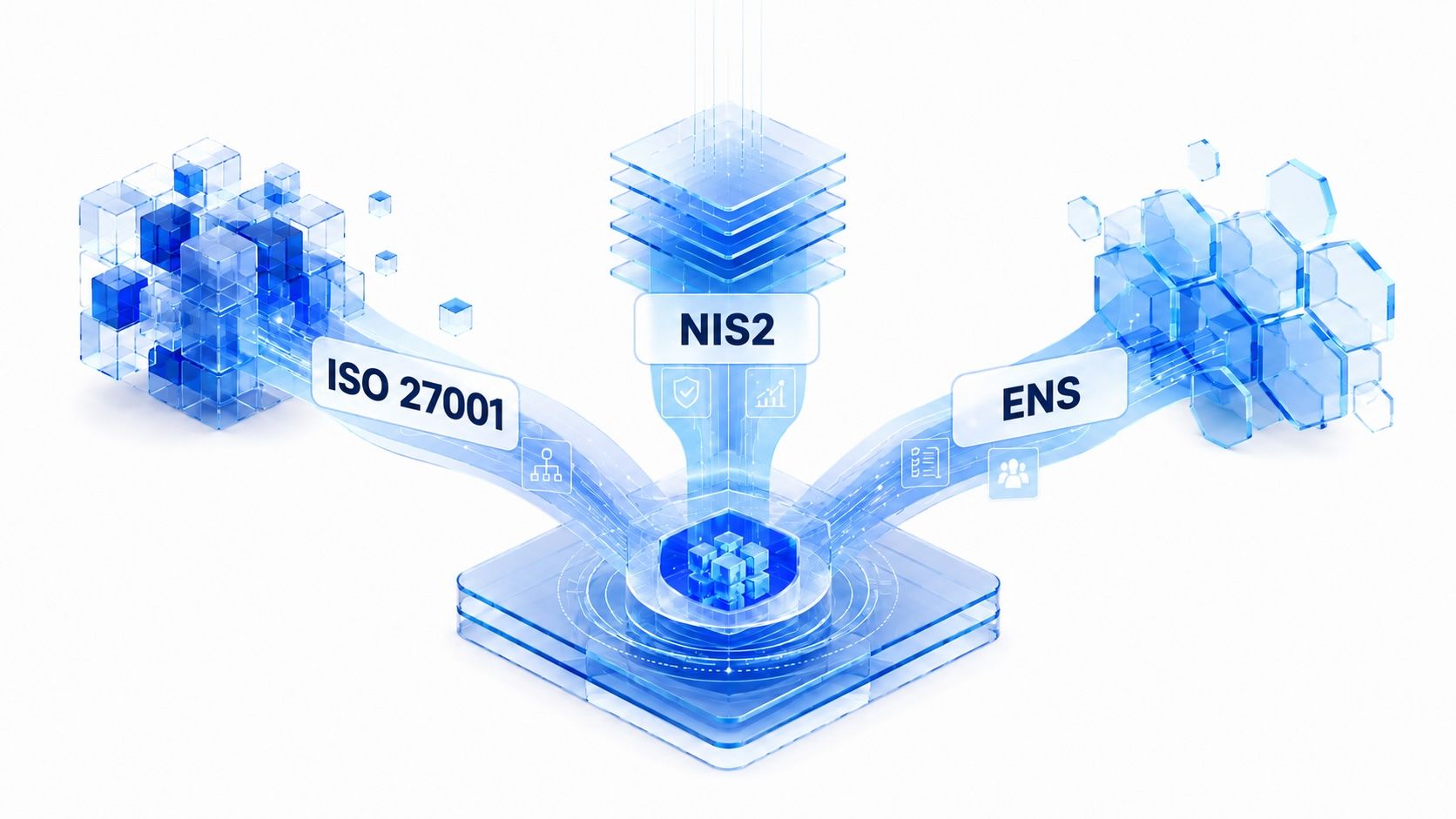
The reason isn’t that there’s a lack of tools. It’s that most were designed to address specific requirements, not to manage compliance holistically. One for the whistleblower channel, another for third-party management, another for risk… but none for the big picture.
The problem is no longer a lack of software. It is the lack of an operating system for compliance.
Perhaps the problem has never been the regulations.
The problem was never the rules
When a compliance officer is asked what their biggest challenge is, they almost never say it’s interpreting a law.
The problems are usually much more mundane.
- Who was supposed to review this policy?
- Which supplier is still awaiting evaluation?
- Where is the evidence of that oversight?
- Who gave the final approval?
- Which employees have not yet completed the mandatory training?
- Which risks haven’t been reviewed in six months?
Modern compliance work is not just about knowing the regulations.
It involves ensuring that hundreds of small processes take place when they are supposed to. And, above all, that there is a record of them.
Compliance is no longer just about documentation
For years, we have associated regulatory compliance with documents: policies, procedures, risk matrices, reports, and records.
But the reality is quite different. Compliance today is an ongoing process. Things happen every day:
- An employee is hired.
- A supplier is signed.
- A policy is being changed.
- An incident occurs.
- A new risk has been detected.
- A certification is about to expire.
- A check is performed.
Each of these events gives rise to an obligation. And every obligation requires a person responsible, a deadline, evidence, and traceability. The true focus of compliance is no longer the documents themselves; it is the processes that generate those documents. In other words: we are no longer just managing documentation.
We are handling operations.
Compliance Operations
More and more organizations are realizing that regulatory compliance needs to be an ongoing process, not a project that is dusted off every time an audit approaches.
It’s not enough to just prepare for an audit. You have to be ready for any audit, at any time.
It’s not enough to simply preserve evidence. It must be generated naturally as the organization goes about its work.
It’s not enough to react when a problem arises. You have to identify which tasks are pending before the problem even arises.
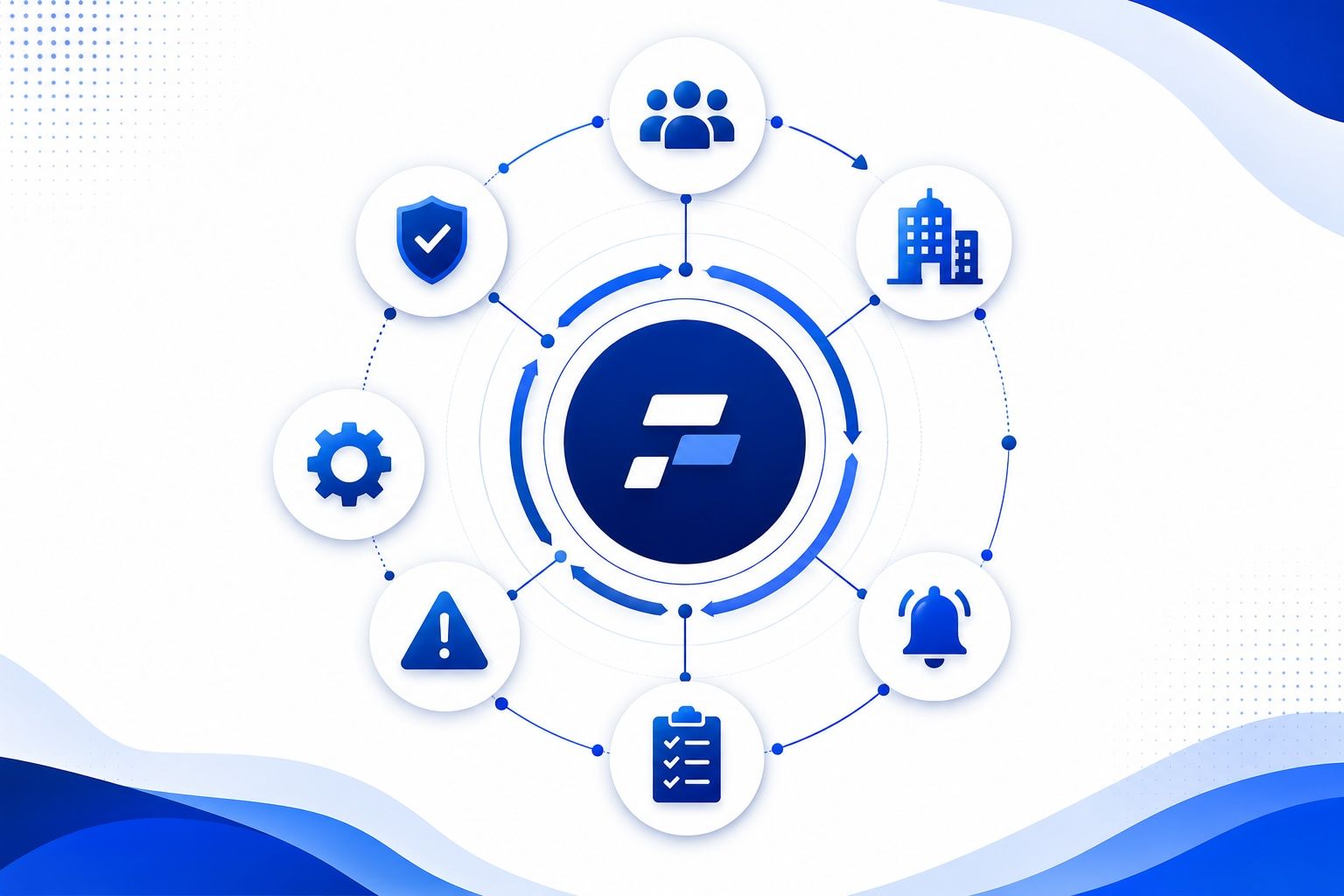
We call this approach to work “Compliance Operations” (ComplianceOps): a compliance management approach based on continuous processes, automation, collaboration, and traceability.
Compliance Operations in Action
Instead of relying on emails, Excel spreadsheets, and people’s memories, these processes become part of the organization’s normal operations.
When a new employee joins the company, they automatically receive the policies they must accept, are assigned the required training, are asked to submit the necessary forms, and each acceptance is recorded. (People Compliance).
When a supplier is added, the approval process begins, the required documentation is collected, the supplier’s criticality is assessed, and a future reevaluation is automatically scheduled. (Third Party Manager).
When an incident occurs, it is documented as soon as it happens; responsible parties and deadlines are assigned; remediation tasks are created; evidence is preserved; and the entire timeline—from detection to resolution—is recorded. (Incident Manager).
When a policy changes, it goes through its approval process; the new version is published; approval is requested again from the appropriate parties; and the complete history of versions and signatures is retained. (Policy Manager).
When a risk has not been reviewed for months, the system does more than just remind you that it exists. It shows its entire history: who identified it, how its severity has changed, what controls were implemented, what evidence is available, and when it should be reassessed. (Risk Manager).
Nothing depends on anyone remembering.
The system guides the process.
The audit is no longer just a project
Many organizations treat the audit as a last-minute rush.
- We’ve been searching for documents for weeks.
- Reconstructing Decisions.
- In Search of Evidence.
- The problem is almost never the audit.
- The thing is, the evidence was never properly gathered from the start.
The most mature organizations do the exact opposite. They build up evidence every day. When the audit comes, they simply show what’s already there.
Because the best audit is one that practically prepares itself.
The real asset is trust
Most organizations will not be called out for lacking a policy.
They will be called into question because they cannot demonstrate that this policy was in effect, was approved, communicated, accepted, and reviewed. More and more customers, investors, government agencies, certification bodies, and regulatory agencies are looking for exactly the same thing.
They don’t want promises. –> They want proof.
And that difference completely changes the way we understand compliance.
The future of compliance will be operational
Just as DevOps changed the way software is developed and SecOps transformed security, all signs point to regulatory compliance evolving toward much more operational models.
- Fewer isolated documents.
- Fewer manual processes.
- Fewer spreadsheets.
- More automation.
- More integration.
- More follow-up.
- More evidence.
Because the goal of compliance is no longer simply to meet a regulation. It is to make compliance an integral part of the organization’s day-to-day operations. Companies that understand this shift will not only spend less time preparing for audits; they will also make better decisions, respond more quickly to risks, and be able to demonstrate their compliance at any time.
That’s Compliance Operations.
And it’s likely to be the next major development in compliance.
Compliance in the future will not be measured by the number of policies an organization has. It will be measured by its ability to demonstrate, at any time, that those policies actually work and are being followed.
Compliance is no longer a department.
It is starting to become the organization’s operating system.
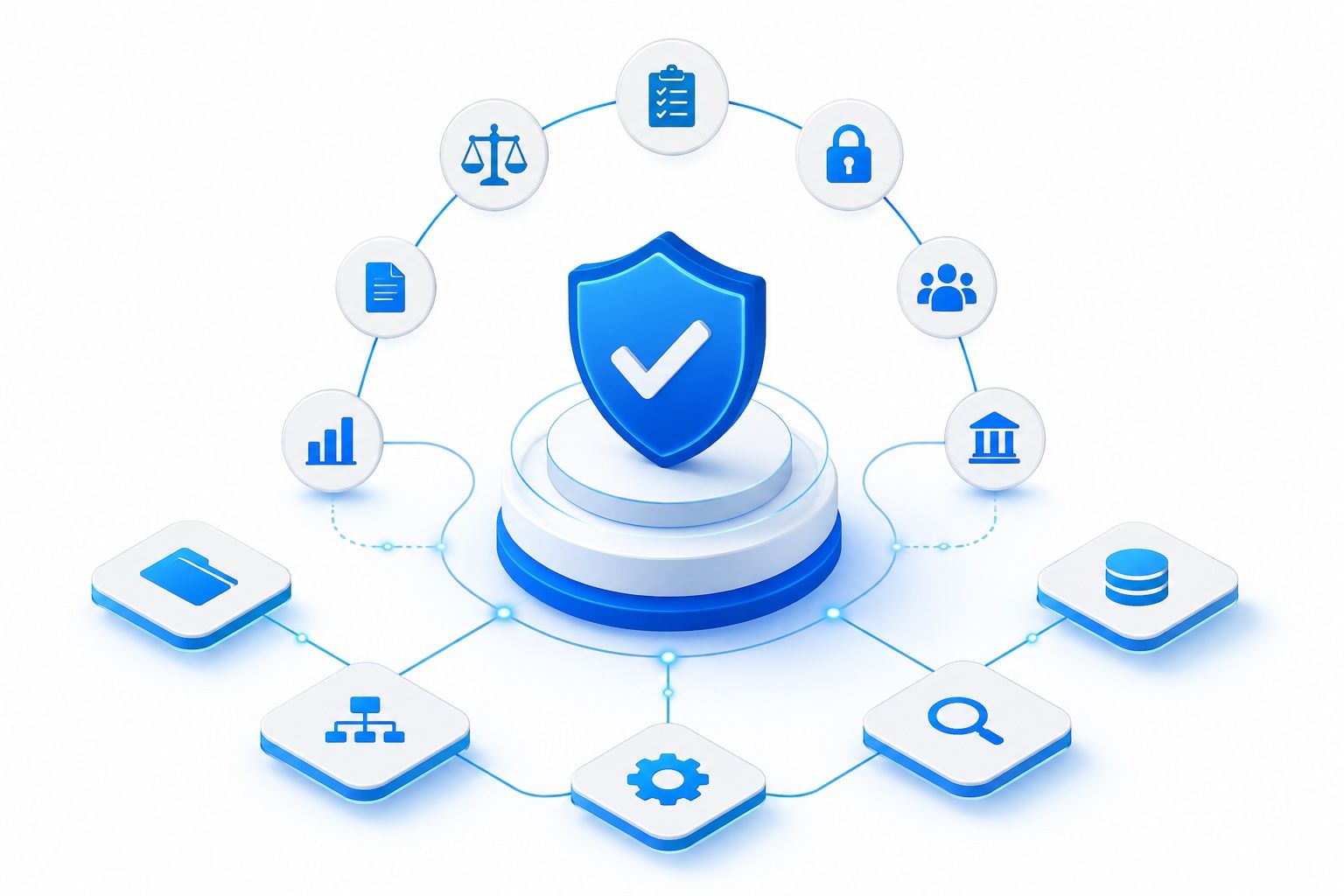
In Ithikios , we’ve been working for some time to build this vision: a platform where people, policies, risks, incidents, third parties, controls, and evidence are all part of a single compliance operating system.
Because we believe that the future does not lie in having more isolated tools, but rather in having a platform capable of ensuring compliance on an ongoing basis.
How would your team’s work change if compliance were no longer reliant on Excel, emails, and reminders, but instead became a dynamic, automated process that’s always ready to provide evidence?
If you’d like to see how it works for your organization, request a demo.